

window.dataLayer = window.dataLayer || []; function gtag(){dataLayer.push(arguments);} gtag('js', new Date()); gtag('config', 'UA-157086367-1');

About Remi Silva

This author has not yet filled in any details.
So far Remi Silva has created 1449 blog entries.

Sales of Distressed Properties Hit New Low

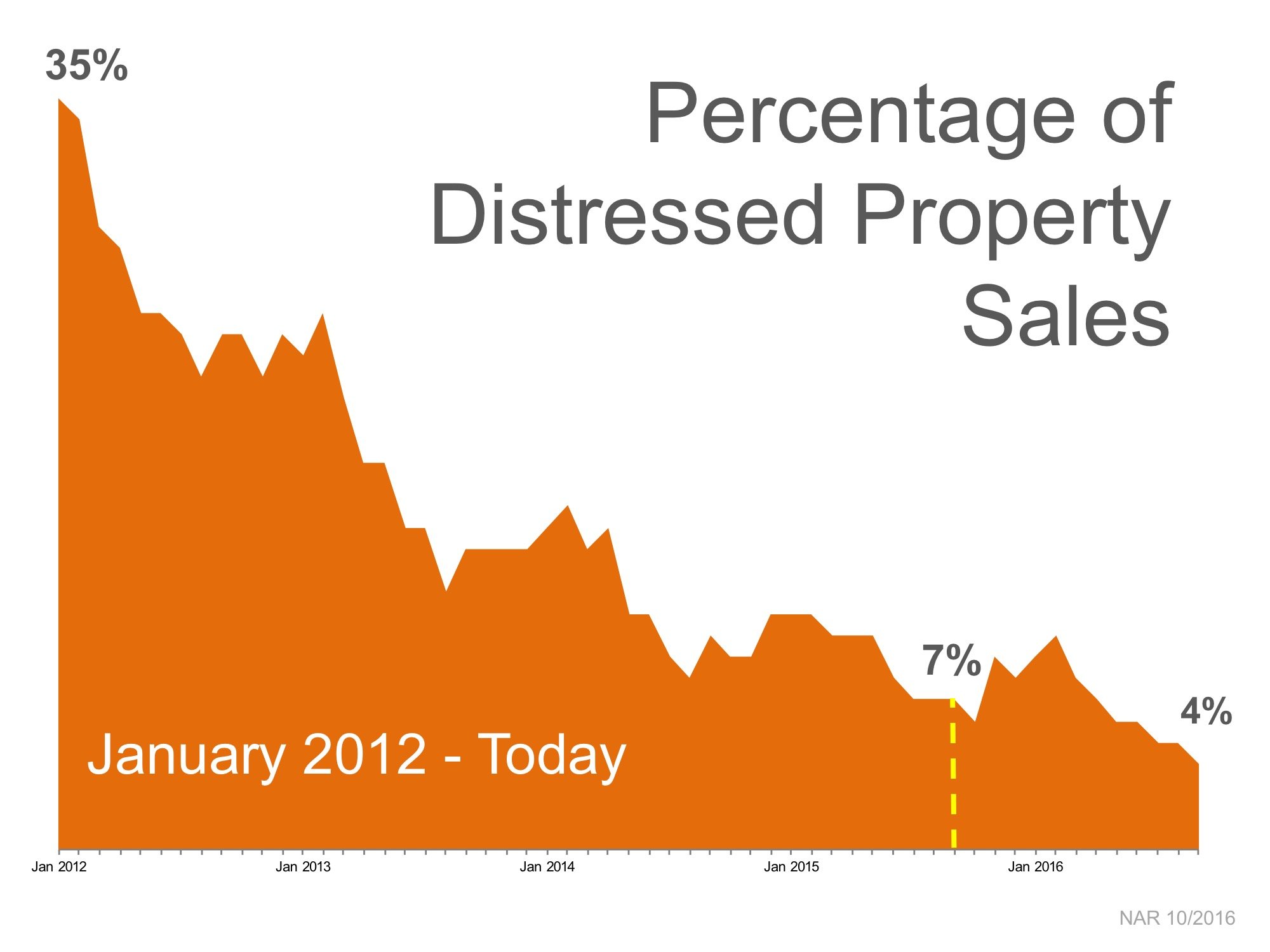
The National Association of Realtors (NAR) recently released their latest Existing Home Sales Report revealing that distressed property sales accounted for 4% of sales in September. This is down from 7% in 2015, and is the lowest figure since NAR began tracking distressed sales in October 2008.


Below is a graph that shows just how far the market has come since January 2012 when distressed sales accounted for 35% of all sales.
Sales of Distressed Properties Hit New Low | Simplifying The Market

Existing Home Sales Hit 2nd Highest Figure Since June 

Mortgage interest rates remained well below 4% in September at 3.46%, prompting existing home sales to stay at a healthy annual pace of 5.47 million. Month-over-month sales were up 3.2%.

Inventory of homes for sale remains below the 6-month supply that is necessary for a normal market, as it fell 2.2% to a 4.5-month supply. The shortage in inventory has contributed to the median home price rising an additional 5.6% to $234,200.

NAR’s Chief Economist, Lawrence Yun had this to say about the lack of inventory:

“Inventory has been extremely tight all year and is unlikely to improve now that the seasonal decline in listings is about to kick in.”

There is good news though, as Yun went on to say:

“There’s hope the leap in sales to first-time buyers can stick through the rest of the year and into next spring. The market fundamentals — primarily consistent job gains and affordable mortgage rates — are there for the steady rise in first-timers needed to finally reverse the decline in the homeownership rate.”  

Bottom Line

If you are debating putting your home on the market this year, now may be the time. Buyers are still out there looking for their dream home. Let’s get together to determine your best plan.

Sales of Distressed Properties Hit New Low2016-11-23T21:24:21+00:00

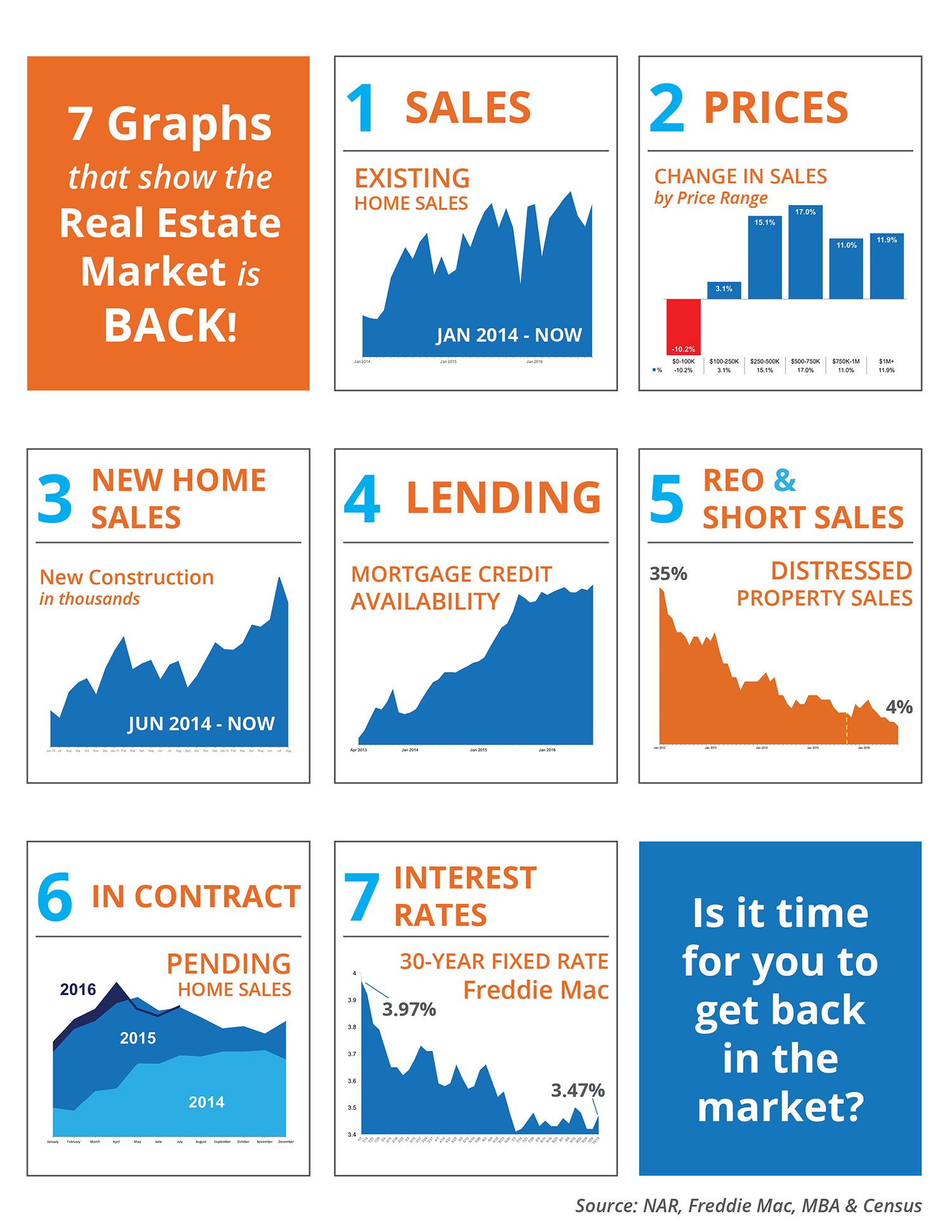
7 Graphs That Show the Real Estate Market is Back! [INFOGRAPHIC]


Some Highlights:

  • Distressed property sales fell to its lowest number since NAR began tracking it in 2008.
  • As you can see, with less distressed properties, sales are up in all price ranges except the $0 – $100K price range.
  • Interest rates are still at historic lows, signifying that now is the right time to buy!
7 Graphs That Show the Real Estate Market is Back! [INFOGRAPHIC]2016-11-23T21:26:47+00:00

The ‘Great News’ About Rising Prices

Recently there has been a lot of talk about home prices and if they are accelerating too quickly. In some areas of the country, seller supply (homes for sale) cannot keep up with the number of buyers out looking for a home, which has caused prices to rise.


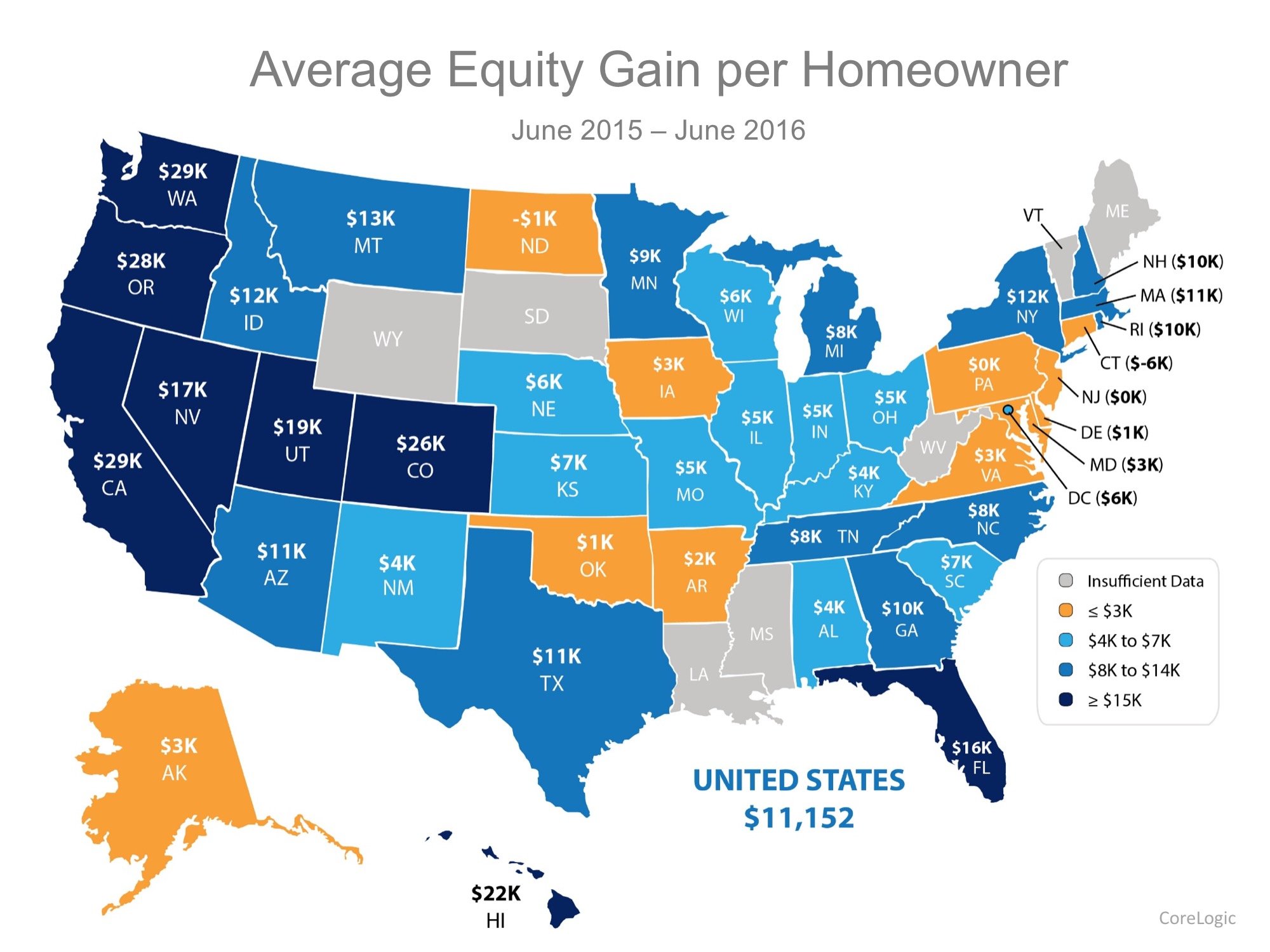
The great news about rising prices, however, is that according to CoreLogic’s latest US Economic Outlook, the average American household gained over $11,000 in equity over the course of the last year, largely due to home value increases.

The map below was created from CoreLogic’s report and shows the average equity gain per mortgaged home from June 2015 to June 2016 (the latest data available).

The ‘Great News’ About Rising Prices | Simplifying The Market

For those that are worried that we are doomed to repeat 2006 all over again, it is important to note that homeowners are investing their new found equity in their homes and themselves, not in depreciating assets.

The added equity is helping families put their children through college, and even invest in starting small businesses, allowing them to pay of their mortgage sooner or move up to the home that will better suit their needs now.

Bottom Line

CoreLogic predicts that home prices will appreciate by another 5% by this time next year. If you are a homeowner looking to take advantage of your home equity by moving up to your dream home, let’s get together to discuss your options!

The ‘Great News’ About Rising Prices2016-11-23T21:27:48+00:00

Starting to Look for a Home? Know What You WANT vs. What You NEED

In this day and age of being able to shop for anything anywhere, it is really important to know what you’re looking for when you start your home search.


If you’ve been thinking about buying a home of your own for some time now, you’ve probably come up with a list of things that you’d LOVE to have in your new home. Many new homebuyers fantasize about the amenities that they see on television or Pinterest, and start looking at the countless homes listed for sale with rose-colored glasses.

Do you really need that farm sink in the kitchen in order to be happy with your home choice? Would a two-car garage be a convenience or a necessity? Could the man cave of your dreams be a future renovation project instead of a make or break now?

The first step in your home buying process should be to get pre-approved for your mortgage. This allows you to know your budget before you fall in love with a home that is way outside of it.

The next step is to list all the features of a home that you would like, and to qualify them as follows:

  • ‘Must Haves’ – if this property does not have these items, then it shouldn’t even be considered. (ex: distance from work or family, number of bedrooms/bathrooms)
  • ‘Should Haves’ – if the property hits all of the must haves and some of the should haves, it stays in contention, but does not need to have all of these features.
  • ‘Absolute Wish List’ – if we find a property in our budget that has all of the ‘must haves,’ most of the ‘should haves,’ and ANY of these, it’s the winner!

Bottom Line

Having this list flushed out before starting your search will save you time and frustration, while also letting your agent know what features are most important to you before starting to show you houses in your desired area.

Starting to Look for a Home? Know What You WANT vs. What You NEED2016-11-23T21:27:55+00:00

How Historically Low Interest Rates Increase Your Purchasing Power

According to Freddie Mac’s latest Primary Mortgage Market Survey, interest rates for a 30-year fixed rate mortgage are currently at 3.47%. Rates have remained at or below 3.5% each of the last 16 weeks, marking a historic low.


The interest rate you secure when buying a home not only greatly impacts your monthly housing costs, but also impacts your purchasing power.

Purchasing power, simply put, is the amount of home you can afford buy for the budget you have available to spend. As rates increase, the price of the house you can afford will decrease if you plan to stay within a certain monthly housing budget.

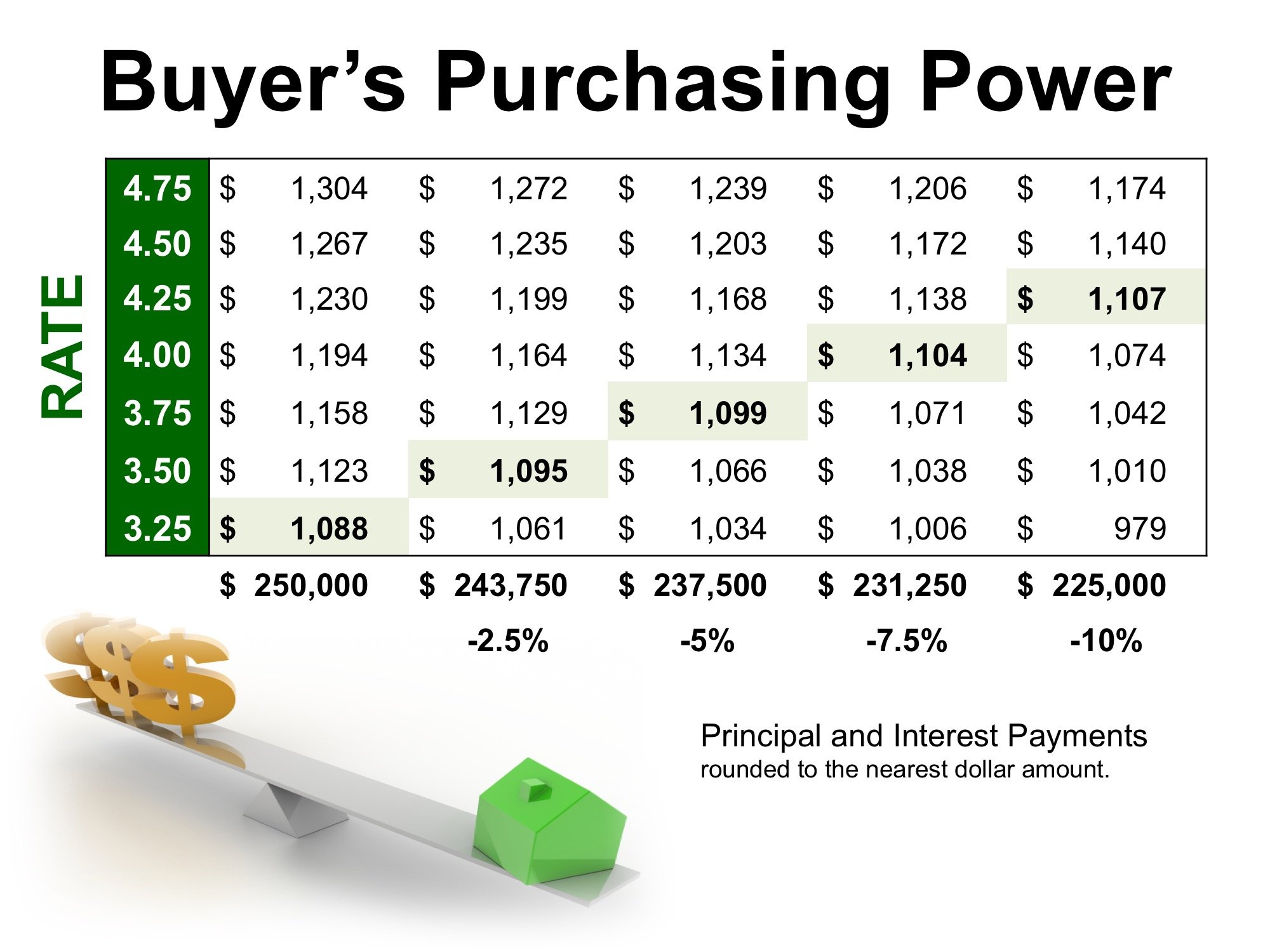
The chart below shows what impact rising interest rates would have if you planned to purchase a home within the national median price range, and planned to keep your principal and interest payments at or about $1,100 a month.

How Historically Low Interest Rates Increase Your Purchasing Power | Simplifying The Market

With each quarter of a percent increase in interest rate, the value of the home you can afford decreases by 2.5%, (in this example, $6,250). Experts predict that mortgage rates will be closer to 4% by this time next year.

Act now to get the most house for your hard earned money.

How Historically Low Interest Rates Increase Your Purchasing Power2016-11-23T21:28:02+00:00
Go to Top