

window.dataLayer = window.dataLayer || []; function gtag(){dataLayer.push(arguments);} gtag('js', new Date()); gtag('config', 'UA-157086367-1');

About Remi Silva

This author has not yet filled in any details.
So far Remi Silva has created 1449 blog entries.

Why Waiting Until After the Holidays to Sell Isn’t a Smart Decision

Every year at this time, many homeowners decide to wait until after the holidays to put their homes on the market for the first time, while others who already have their homes on the market decide to take them off until after the holidays. Here are six great reasons not to wait:


  1. Relocation buyers are out there. Companies are not concerned with holiday time and if the buyers have kids, they want them to get into school after the holidays. 
  1. Purchasers that are looking for a home during the holidays are serious buyers and are ready to buy.
  1. You can restrict the showings on your home to the times you want it shown. You will remain in control.
  1. Homes show better when decorated for the holidays. 
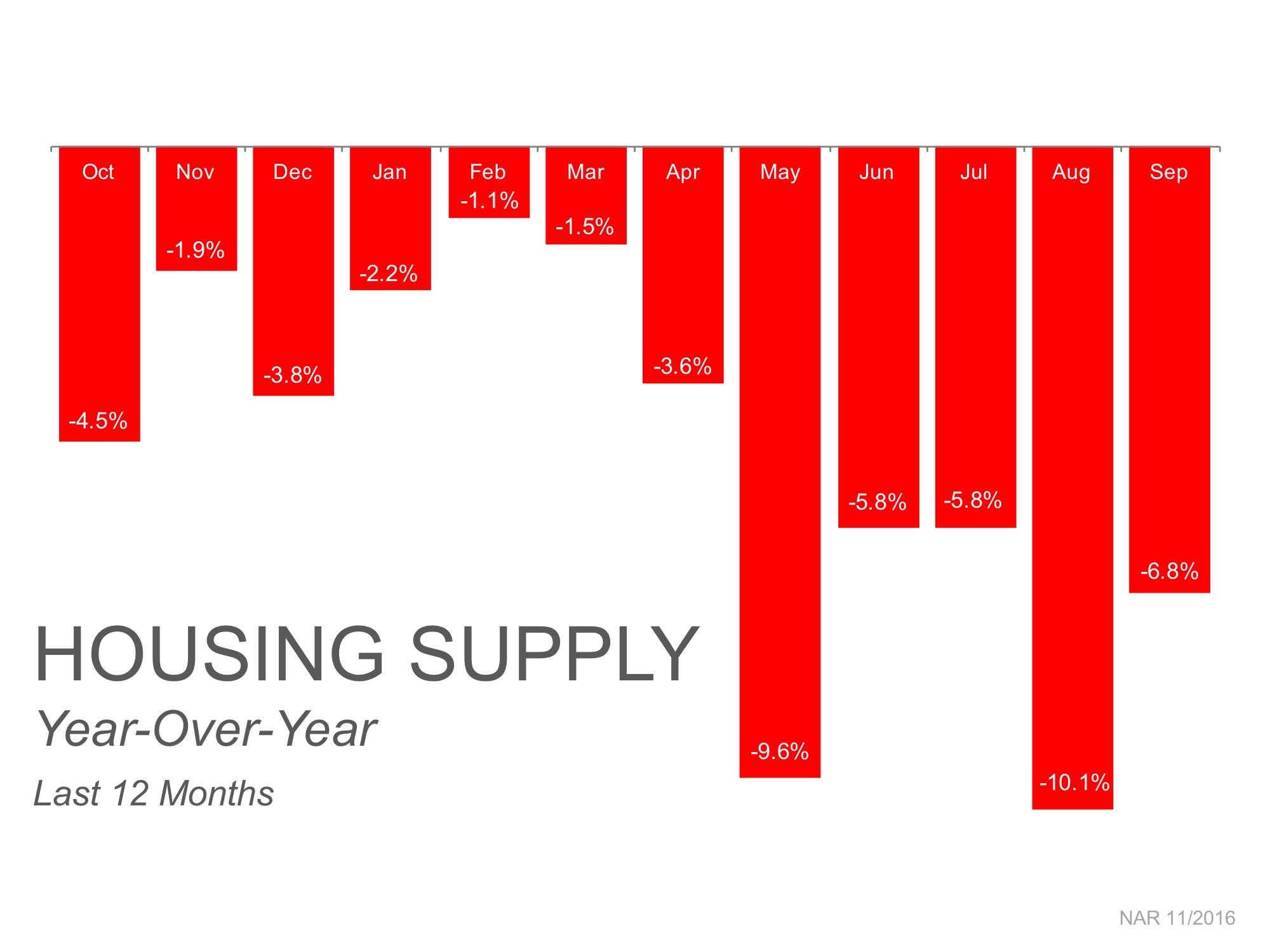
  1. There is less competition for you as a seller right now. Let’s take a look at listing inventory as compared to the same time last year:
Why Waiting Until After the Holidays to Sell Isn’t a Smart Decision | Simplifying The Market

  1. The supply of listings increases substantially after the holidays. Also, in many parts of the country, new construction will continue to surge reaching new heights in 2017, which will lessen the demand for your house.

Bottom Line

Waiting until after the holidays to sell your home probably doesn’t make sense.

Why Waiting Until After the Holidays to Sell Isn’t a Smart Decision2016-11-23T21:11:39+00:00

The Truth About Housing Affordability

From a purely economic perspective, this is one of the best times in American history to buy a home. Black Night Financial Services discusses this in their most recent Monthly Mortgage Monitor.


Here are two of the report’s revelations:

  1. The average U.S. home value increased by $13,500 from last year, but low interest rates have kept the monthly principal & interest payment needed to purchase a median-priced home almost equal to one year ago.
  2. Home affordability still remains favorable compared to long-term historic norms.

The report explains:

“Even though the value of the average home in the U.S. increased by about $13,500 over the last year, thanks to declining interest rates it actually costs almost exactly the same in principal and interest each month to purchase as it did this time last year.

Even taking into account the fact that affordability can vary – sometimes significantly – across the country based upon the different rates of home price appreciation we’re seeing, that’s a pretty incredible balancing act between interest rates and home prices at the national level…

Right now, it takes 20 percent of the median monthly income to cover monthly payments on the median-priced home, which is well below historical norms.”

However, the report warns that affordability will be dramatically impacted by an increase in mortgage rates.

“A half-point increase in interest rates would be equivalent to a $17,000 jump in the average home price, and bring that ratio to 21.5 percent. This increase is still below historical norms, but puts more pressure on homebuyers.”

Bottom Line

If you are ready and willing to purchase a home of your own, let’s get together to find out if you are able to. Now is a great time to jump in.

The Truth About Housing Affordability2016-11-23T21:13:55+00:00

The Dangers of “Tight Mortgage Credit” Headlines

The availability of mortgage credit is not at the same level that it was during the boom in housing (2005), and that’s good news. However, the constant headlines which talk about “tight credit” are causing some potential home buyers to doubt their ability to purchase. We want to rectify the misconception of what is required for a down payment in order to purchase a home in today’s market.

Freddie Mac recently discussed the confusion many first-time homebuyers have about the down payment they need in order to buy:

“Did you know that the average down payment among first–time homebuyers is 6% and it’s 13–14% for repeat buyers…It’s possible to put down even less.

Many potential homebuyers think that only the FHA helps make mortgage loans with low down payments. Not true.

Freddie Mac’s Home Possible mortgage products let qualified homebuyers put down as little as 3%.”

Brenda Garcia Lemus of John Burns Real Estate Consulting reports that this is also the case with newly constructed homes: 

“Our home-builder clients sell hundreds of homes every weekend to buyers with 5% down payments and below average credit scores. Yet, many middle-income households with average credit and access to a 5% down payment assume they cannot become homeowners because of the ‘tight credit’ headlines.”

Bottom Line

Before you ‘disqualify’ yourself, let’s get together to find out if you qualify to buy today.


The Dangers of “Tight Mortgage Credit” Headlines2016-11-23T21:14:53+00:00

It’s Not Always Marriage Before Mortgage

There are many people sitting on the sidelines trying to decide if they should purchase a home or sign a rental lease. Some might wonder if it makes sense to purchase a house before they are married and have a family. Others may think they are too young. And still, others might think their current income would never enable them to qualify for a mortgage.

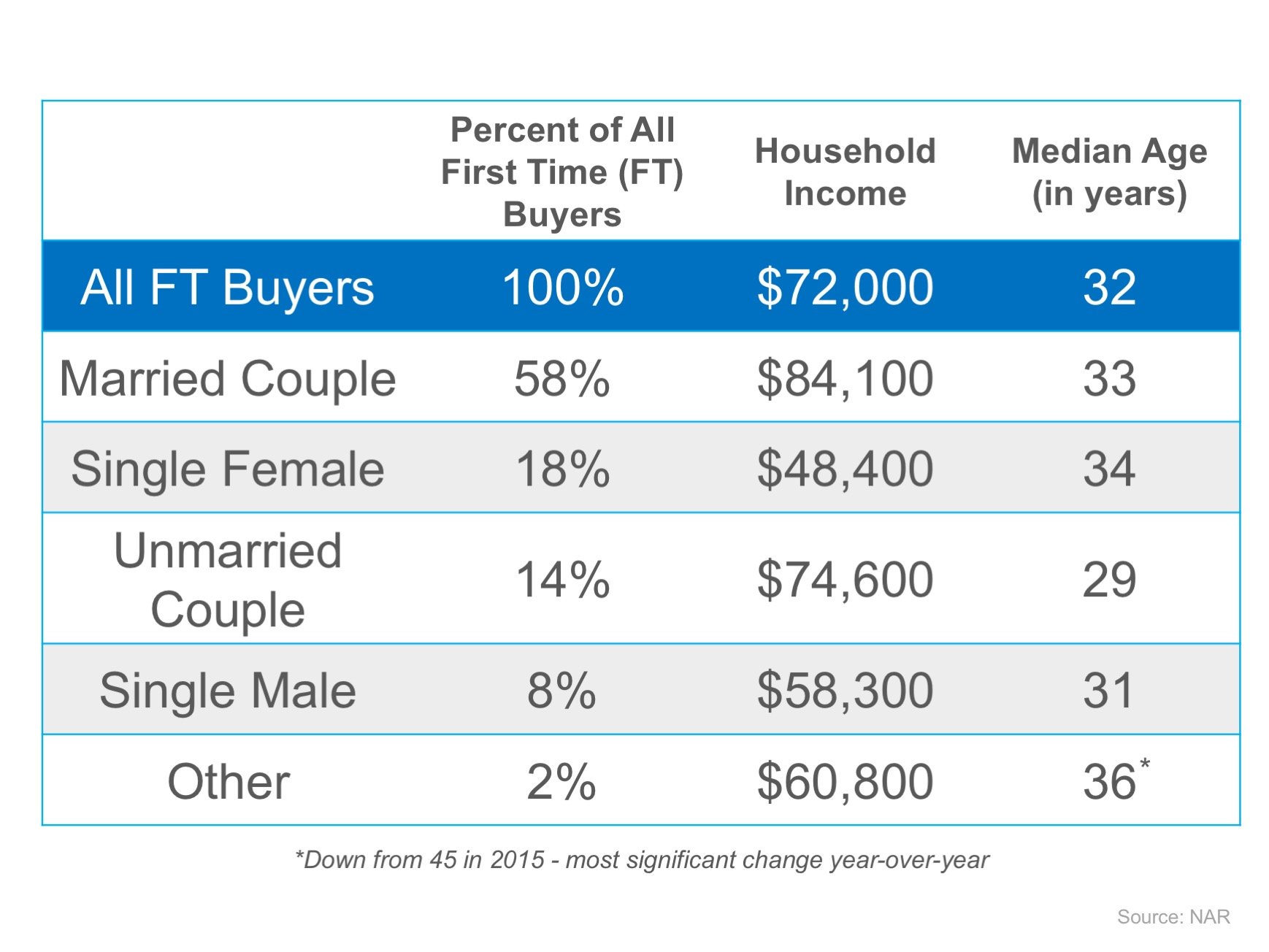
We want to share what the typical first-time homebuyer actually looks like based on the National Association of REALTORS most recent Profile of Home Buyers & Sellers. Here are some interesting statistics on the first-time buyer:

It’s Not Always Marriage Before Mortgage | Simplifying The Market

Unmarried couples jumped up to the third spot, right after their married counterparts and single women. Many couples are buying a home before spending what would be a down payment on a wedding.

Bottom Line

You may not be much different than many people who have already purchased their first home. Let’s get together to determine if your dream home is within your grasp.

It’s Not Always Marriage Before Mortgage2016-11-23T21:15:39+00:00
Go to Top