
window.dataLayer = window.dataLayer || []; function gtag(){dataLayer.push(arguments);} gtag('js', new Date()); gtag('config', 'UA-157086367-1');

About Remi Silva

This author has not yet filled in any details.
So far Remi Silva has created 1449 blog entries.

Existing Home Sales Surge Through The Holidays [INFOGRAPHIC]

Existing Home Sales Surge Through The Holidays [INFOGRAPHIC] | Simplifying The Market

Some Highlights:

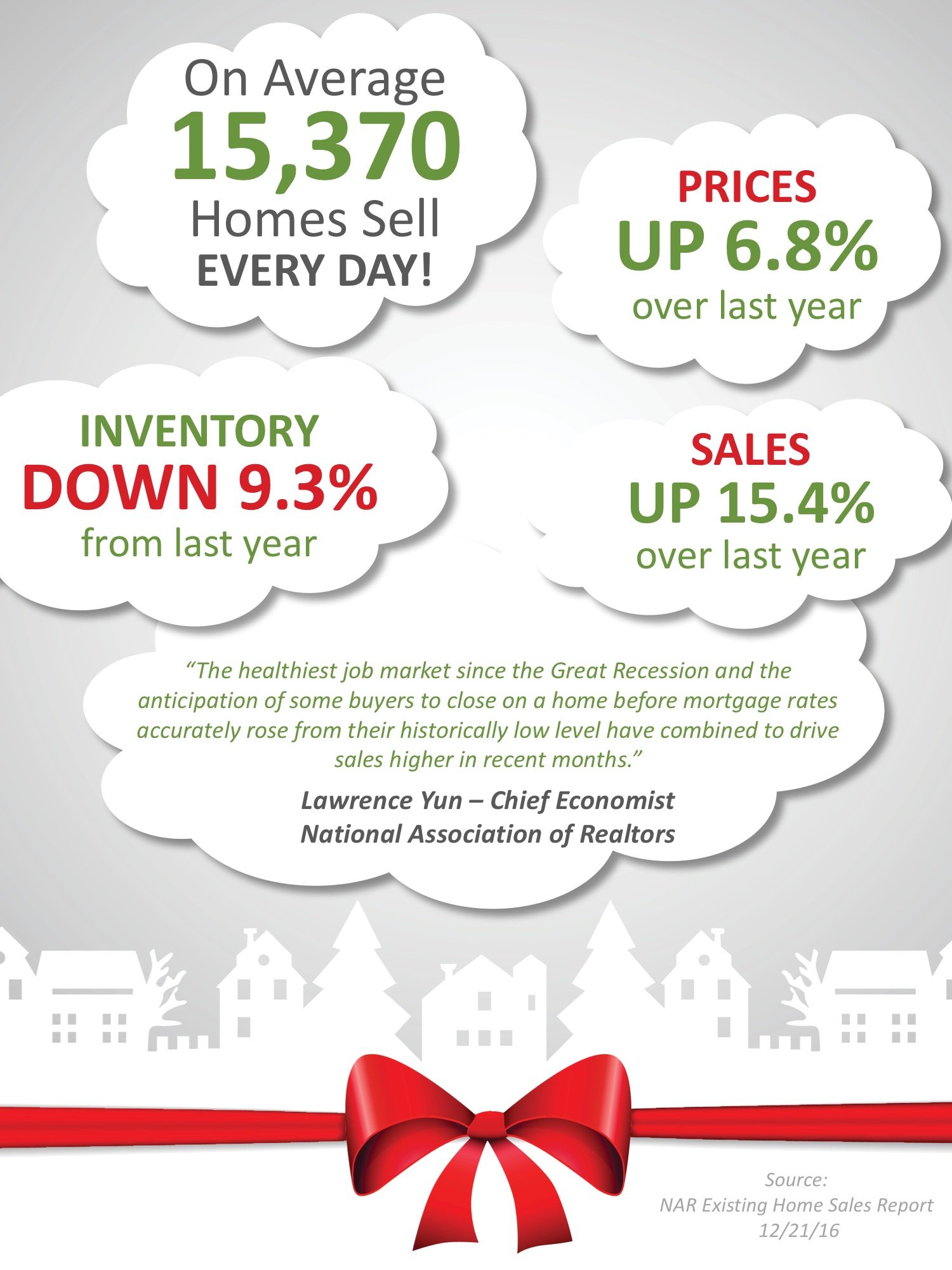
  • November’s Existing Home Sales report revealed that sales are now at an annual pace of 5.61 million which is “now the highest since February 2007 (5.79 million) and is 15.4% higher than a year ago (4.86 million).”
  • Total housing inventory (or the inventory of homes for sale) fell 8.0% from last month and is now 9.3% lower than November 2015.
  • Inventory has dropped year-over-year for the last 18 months.
  • The median price for all home sales in November was $234,900, up 6.8% from last year and marks the 57th consecutive month of year-over-year gains.
Existing Home Sales Surge Through The Holidays [INFOGRAPHIC]2016-12-23T11:00:12+00:00

The Fed Raised Rates: What Does that Mean for Housing?

The Fed Raised Rates: What Does that Mean for Housing? | Simplifying The Market

You may have heard that the Federal Reserve raised rates last week… But what does that mean if you are looking to buy a home in the near future?

Many in the housing industry have predicted that the Federal Open Market Committee (FOMC), the policy-making arm of the Federal Reserve, would vote to raise the federal fund’s target rate at their December meeting. For only the second time in a decade, this is exactly what happened.

There were many factors that contributed to the 0.25 point increase (from 0.50 to 0.75), but many are pointing to the latest jobs report and low unemployment rate (4.6%) as the main reason.

Tim Manni, Mortgage Expert at Nerd Wallet, had this to say,

“Homebuyers shouldn’t be particularly concerned with [last week’s] Fed move. Even with rates hovering over 4 percent, they’re still historically low. Most market observers are expecting a gradual rise in home loan rates in the near term, anticipating mortgage rates to stay under 5 percent through 2017.”

Bottom Line

Only time will tell what the long-term impact of the rate hike will be, but in the short term, there should be no reason for alarm.

The Fed Raised Rates: What Does that Mean for Housing?2016-12-22T11:00:42+00:00

Student Loans = Higher Credit Scores

Student Loans = Higher Credit Scores | Simplifying The Market

According to a recent analysis by CoreLogic, Millennial renters (aged 20-34) who have student loan debt also have higher credit scores than those who do not have student loans.

This may come as a surprise, as there is so much talk about student loans burdening Millennials and holding them back from many milestones that previous generations have been able to achieve (i.e. homeownership, investing for retirement).

CoreLogic used the information provided on rental applications and the applicants’ credit history from credit bureaus to determine if there was a correlation between student loan debt and credit scores.

The analysis concluded that:

“Student loan debt did not prevent millennials from access to credit even though it may delay their homebuying decisions.”

In fact, those with a higher amount of debt actually had higher credit scores.

“Renters with student loan debt have higher average credit scores than those without; and those with higher debt amounts have higher average credit scores than those with lower student loan debt amounts.”

Bottom Line

Millennials are on pace to become the most educated generation in our nation’s history, with that comes a pretty big bill for education. But there is a light at the end of the tunnel:

“Despite the fact that student loan debt has grown into the nation’s second largest consumer debt, following mortgage, and has created a significant financial burden for millennials, it does not appear to prevent millennials from accessing credit.”

Student Loans = Higher Credit Scores2016-12-21T11:00:37+00:00

Whether You Rent or Buy: Either Way You’re Paying a Mortgage

Whether You Rent or Buy: Either Way You’re Paying a Mortgage | Simplifying The Market

There are some renters who have not yet purchased a home because they are uncomfortable taking on the obligation of a mortgage. Everyone should realize that, unless you are living with your parents rent free, you are paying a mortgage – either yours or your landlord’s.

As an owner, your mortgage payment is a form of ‘forced savings’ that allows you to build equity in your home that you can tap into later in life. As a renter, you guarantee your landlord is the person with that equity.

Are you ready to put your housing cost to work for you?

Christina Boyle, Senior Vice President and Head of Single-Family Sales & Relationship Management at Freddie Mac, explains another benefit of securing a mortgage vs. paying rent:

“With a 30-year fixed rate mortgage, you’ll have the certainty & stability of knowing what your mortgage payment will be for the next 30 years – unlike rents which will continue to rise over the next three decades.”

Bottom Line

This holiday season, why not give yourself the gift of homeownership? Lock in your housing costs for the next 30 years and guarantee you are the one building wealth.

Whether You Rent or Buy: Either Way You’re Paying a Mortgage2016-12-20T11:00:45+00:00

2 Tips to Ensure You Get the Most Money When Selling Your House

2 Tips to Ensure You Get the Most Money When Selling Your House | Simplifying The Market

Every homeowner wants to make sure they get the best price when selling their home. But how do you guarantee that you receive maximum value for your house? Here are two keys to ensuring you get the highest price possible.

1. Price it a LITTLE LOW 

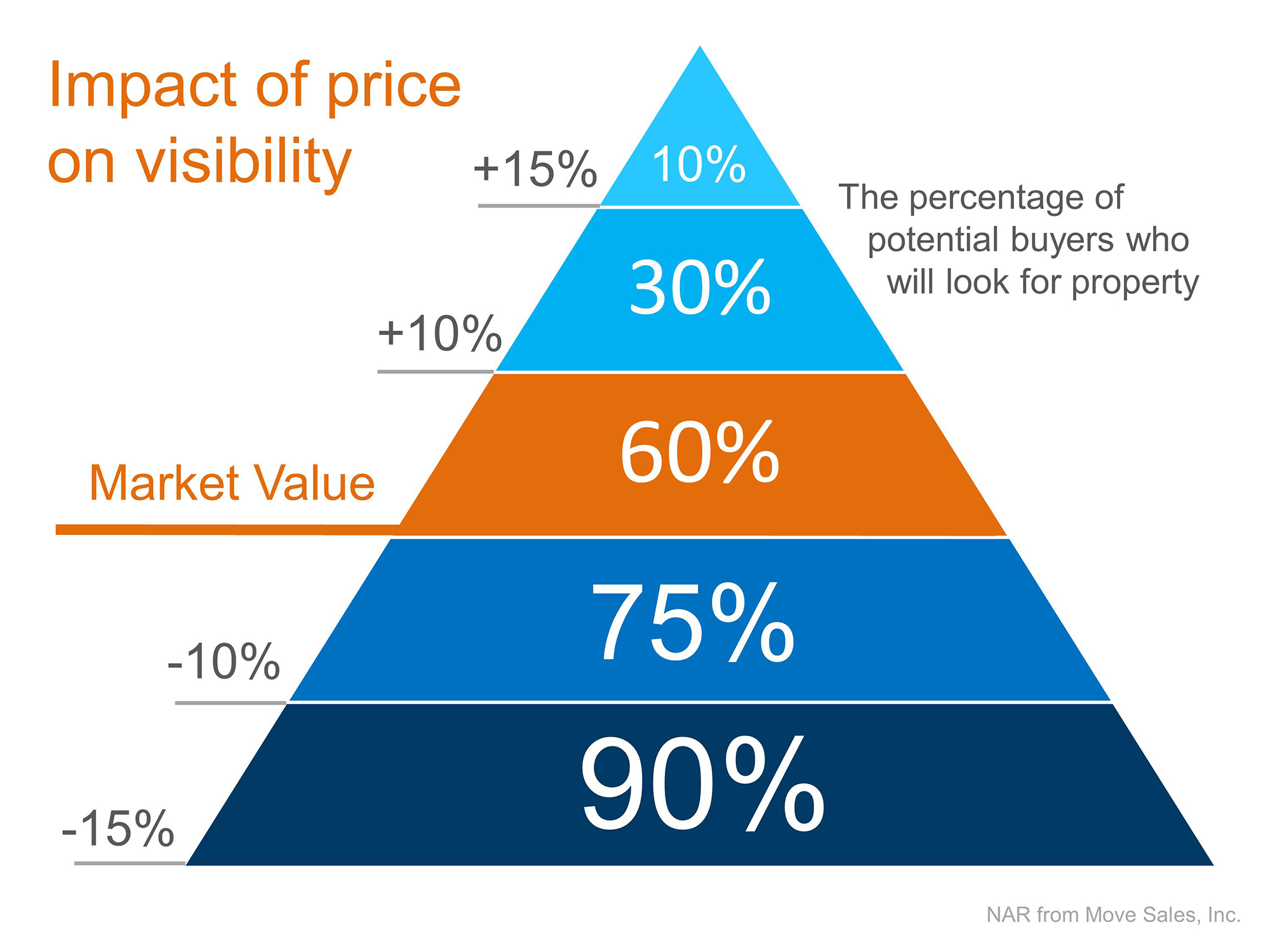
This may seem counterintuitive. However, let’s look at this concept for a moment. Many homeowners think that pricing their home a little OVER market value will leave them room for negotiation. In actuality, this just dramatically lessens the demand for your house (see chart below).

2 Tips to Ensure You Get the Most Money When Selling Your House | Simplifying The Market

Instead of the seller trying to ‘win’ the negotiation with one buyer, they should price it so that demand for the home is maximized. By doing this, the seller will not be fighting with a buyer over the price, but will instead have multiple buyers fighting with each other over the house.

Realtor.com, gives this advice:

“Aim to price your property at or just slightly below the going rate. Today’s buyers are highly informed, so if they sense they’re getting a deal, they’re likely to bid up a property that’s slightly underpriced, especially in areas with low inventory.”

2. Use a Real Estate Professional

This too may seem counterintuitive. The seller may think they would net more money if they didn’t have to pay a real estate commission. With that being said, studies have shown that homes typically sell for more money when handled by a real estate professional.

Research posted by the National Association of Realtors revealed that:

“The median selling price for all FSBO homes was $185,000 last year. When the buyer knew the seller in FSBO sales, the number sinks to the median selling price of $163,800. However, homes that were sold with the assistance of an agent had a median selling price of $245,000 – nearly $60,000 more for the typical home sale.”

Bottom Line

Price your house at or slightly below the current market value and hire a professional. That will guarantee you maximize the price you get for your house.

2 Tips to Ensure You Get the Most Money When Selling Your House2016-12-19T11:00:06+00:00
Go to Top