


window.dataLayer = window.dataLayer || []; function gtag(){dataLayer.push(arguments);} gtag('js', new Date()); gtag('config', 'UA-157086367-1');

About Remi Silva

This author has not yet filled in any details.
So far Remi Silva has created 1449 blog entries.

Where Are the Home Prices Heading in the Next 5 Years?

Where Are the Home Prices Heading in the Next 5 Years? | Simplifying The Market

Today, many real estate conversations center on housing prices and where they may be headed. That is why we like the Home Price Expectation Survey.

Every quarter, Pulsenomics surveys a nationwide panel of over one hundred economists, real estate experts, and investment & market strategists about where they believe prices are headed over the next five years. They then average the projections of all 100+ experts into a single number.

The results of their latest survey:

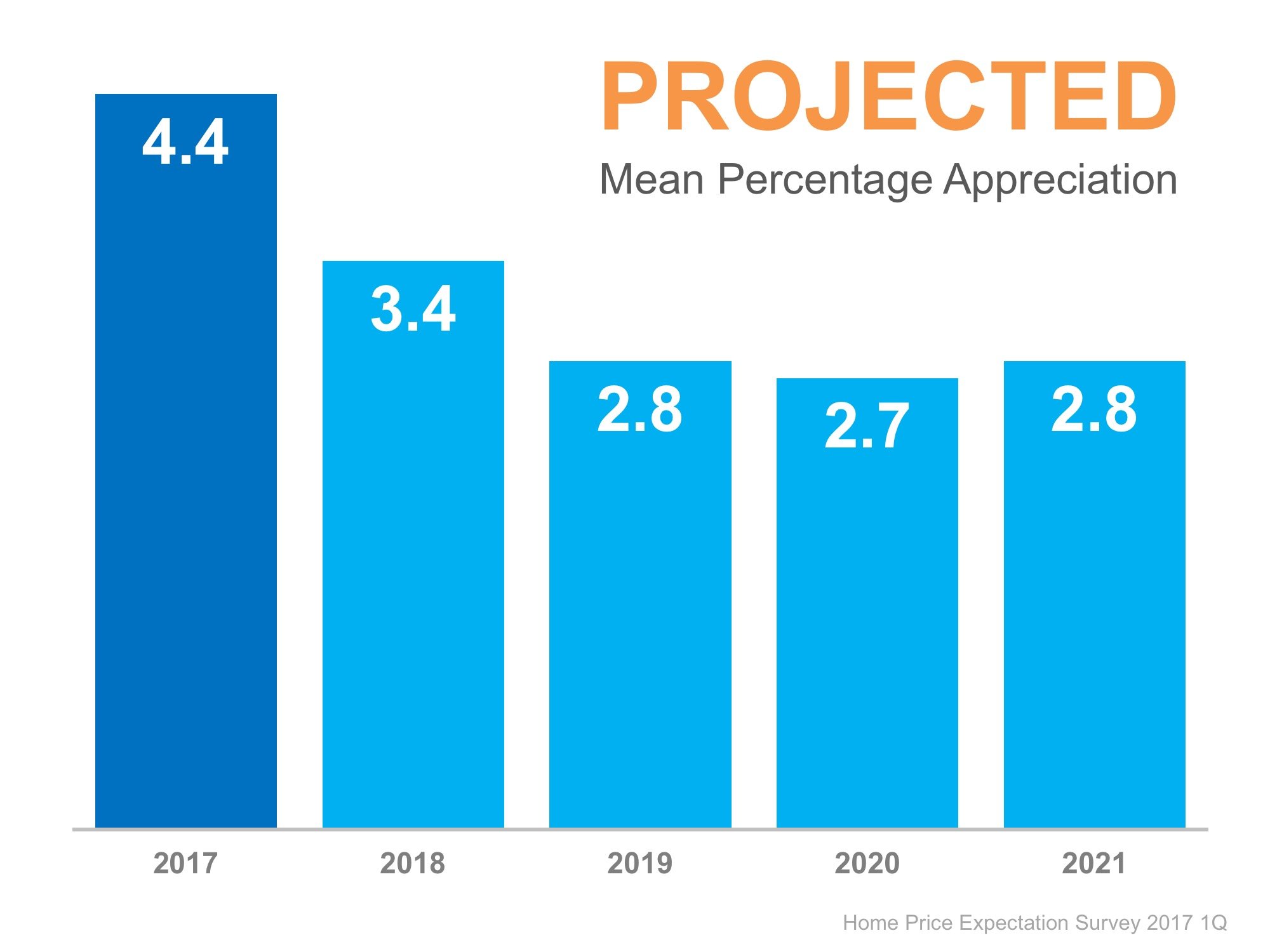
Home values will appreciate by 4.4% over the course of 2017, 3.4% in 2018, 2.8% in 2019, 2.7% in 2020, and 2.8% in 2021. That means the average annual appreciation will be 3.22% over the next 5 years.
Where Are the Home Prices Heading in the Next 5 Years? | Simplifying The Market

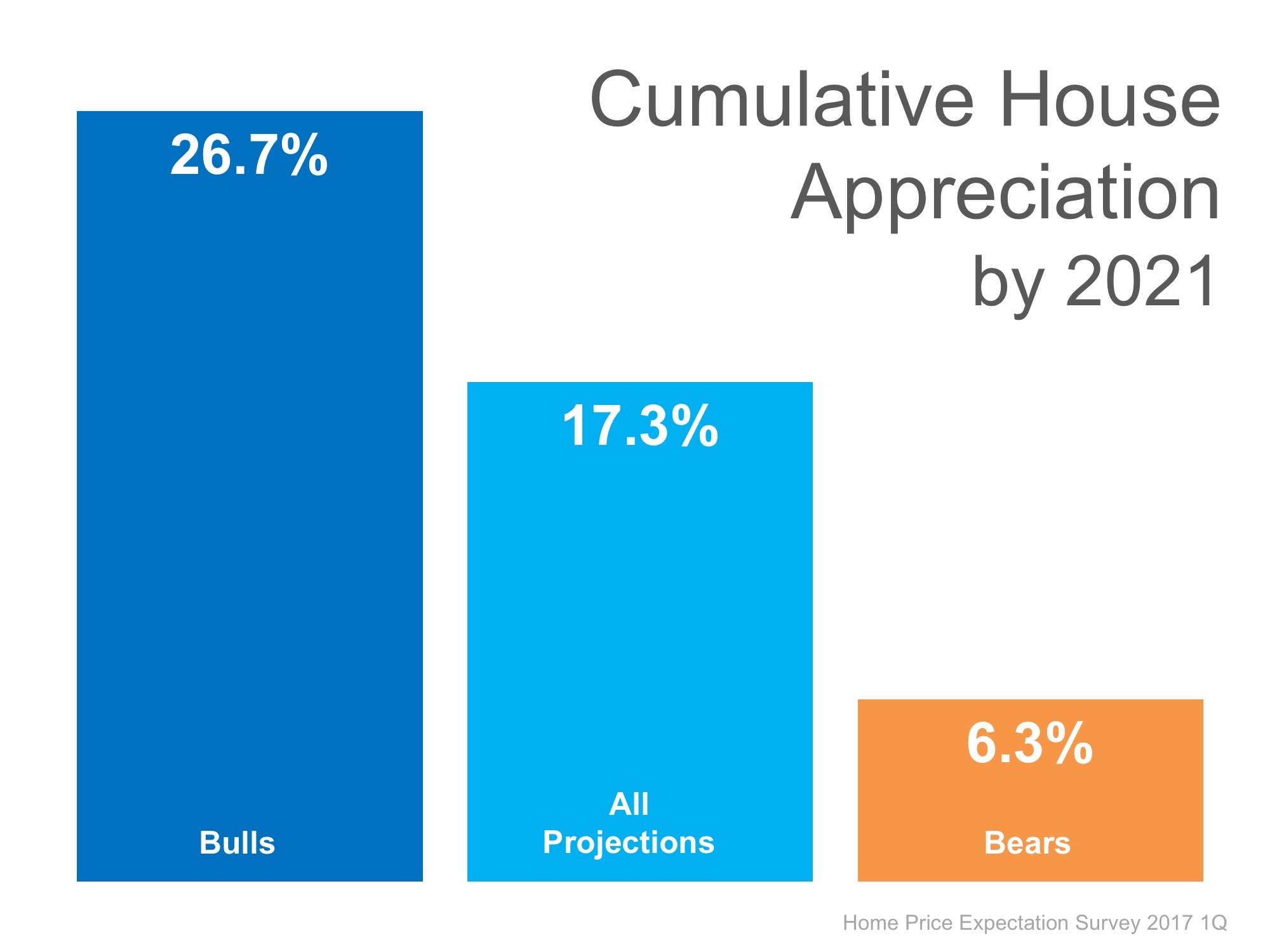
The prediction for cumulative appreciation fell from 21.4% to 17.3% by 2021. The experts making up the most bearish quartile of the survey are projecting a cumulative appreciation of 6.3%.
Where Are the Home Prices Heading in the Next 5 Years? | Simplifying The Market

Bottom Line

Individual opinions make headlines. We believe this survey is a fairer depiction of future values.
Where Are the Home Prices Heading in the Next 5 Years?2017-02-27T11:00:09+00:00

Existing Home Sales Reach Highest Mark Since 2007 [INFOGRAPHIC]

Existing Home Sales Reach Highest Mark Since 2007 [INFOGRAPHIC] | Simplifying The Market

Highlights:

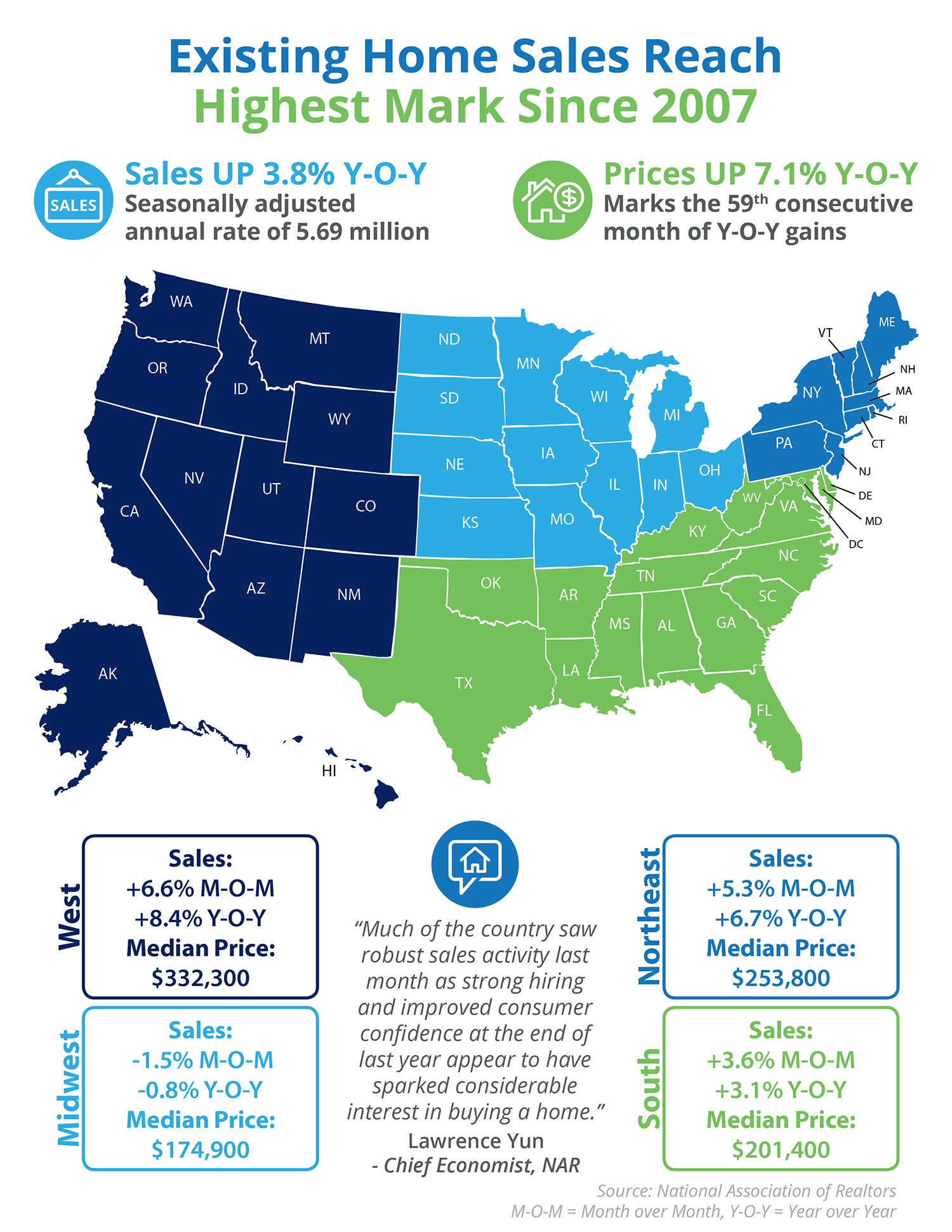
  • Sales of existing homes reached the highest pace in a decade at a seasonally adjusted annual rate of 5.69 million.
  • January marked the 59th consecutive month of year-over-year price gains as the median home price rose 7.1% to $228,900.
  • NAR’s Chief Economist, Lawrence Yun had this to say, “Much of the country saw robust sales activity last month as strong hiring and improved consumer confidence at the end of last year appear to have sparked considerable interest in buying a home.” 
Existing Home Sales Reach Highest Mark Since 2007 [INFOGRAPHIC]2017-02-24T11:00:06+00:00

The Impact of Homeownership on Family Health

The Impact of Homeownership on Family Health | Simplifying The Market

The National Association of Realtors recently released a study titled ‘Social Benefits of Homeownership and Stable Housing.’ The study confirmed a long-standing belief of most Americans:

“Owning a home embodies the promise of individual autonomy and is the aspiration of most American households. Homeownership allows households to accumulate wealth and social status, and is the basis for a number of positive social, economic, family and civic outcomes.”

Today, we want to cover the section of the report that quoted several studies concentrating on the impact homeownership has on the health of family members. Here are some of the major findings on this issue revealed in the report:

  • There is a strong positive relationship between living in poor housing and a range of health problems, including respiratory conditions such as asthma, exposure to toxic substances, injuries and mental health. Homes of owners are generally in better condition than those of renters.
  • Findings reveal that increases in housing wealth were associated with better health outcomes for homeowners.
  • Low-income people who recently became homeowners reported higher life satisfaction, higher self-esteem, and higher perceived control over their lives.
  • Homeowners report higher self-esteem and happiness than renters. For example, homeowners are more likely to believe that they can do things as well as anyone else, and they report higher self-ratings on their physical health even after controlling for age and socioeconomic factors.
  • Renters who become homeowners not only experience a significant increase in housing satisfaction but also obtain a higher satisfaction even in the same home in which they resided as renters.
  • Social mobility variables, such as the family financial situation and housing tenure during childhood and adulthood, impacted one’s self-rated health.
  • Homeowners have a significant health advantage over renters, on average. Homeowners are 2.5 percent more likely to have good health. When adjusting for an array of demographic, socioeconomic, and housing–related characteristics, the homeowner advantage is even larger at 3.1 percent.

Bottom Line

People often talk about the financial benefits of homeownership. As we can see, there are also social benefits of owning your own home.

The Impact of Homeownership on Family Health2017-02-23T11:00:01+00:00

Are You 1 of the 59 Million Planning to Buy This Year?

Are You 1 of the 59 Million Planning to Buy This Year? | Simplifying The Market

According to a survey conducted by Bankrate.com, one in four Americans are considering buying a home this year. If this statistic proves to be true, that means that 59 million people will be looking to enter the housing market in 2017.

The survey also revealed 3 key takeaways:

  1. Those most likely to buy are ‘Older Millennials’ (ages 27-36) or ‘Generation X’ (ages 37-52)
  2. Minorities, particularly African-Americans, were twice as likely to respond that they were considering purchasing a home this year than white respondents.
  3. Many potential buyers believe they need to put 20% down and need to have perfect credit to own and are unaware of programs that would allow them to buy now.

Holden Lewis, a mortgage analyst for Bankrate.com, pointed to one big reason why many Americans are starting to consider homeownership:

“Having kids and raising a family is a primary reason why Americans take the leap into homeownership—many consider it a key component of the American dream.”

Bottom Line

If buying a home is a part of your dream for 2017, let’s get together to determine if you are able to.

Are You 1 of the 59 Million Planning to Buy This Year?2017-02-22T11:00:24+00:00

Access: A Key Component in Getting Your House SOLD!

Access: A Key Component in Getting Your House SOLD! | Simplifying The Market

So, you’ve decided to sell your house. You’ve hired a real estate professional to help you with the entire process, and they have asked you what level of access you want to provide to potential buyers.

There are four elements to a quality listing. At the top of the list is Access, followed by Condition, Financing, and Price. There are many levels of access that you can provide to your agent so that he or she can show your home.

Here are five levels of access that you can give to buyers, along with a brief description:

  1. Lockbox on the Door – this allows buyers the ability to see the home as soon as they are aware of the listing, or at their convenience.
  2. Providing a Key to the Home – although the buyer’s agent may need to stop by an office to pick up the key, there is little delay in being able to show the home.
  3. Open Access with a Phone Call – the seller allows showing with just a phone call’s notice.
  4. By Appointment Only (example: 48 Hour Notice) – Many buyers who are relocating for a new career or promotion start working in that area prior to purchasing their home. They often like to take advantage of free time during business hours (such as their lunch break) to view potential homes. Because of this, they may not be able to plan their availability far in advance or may be unable to wait 48 hours to see the house.
  5. Limited Access (example: the home is only available on Mondays or Tuesdays at 2pm or for only a couple of hours a day) – This is the most difficult way to be able to show your house to potential buyers.

In a competitive marketplace, access can make or break your ability to get the price you are looking for, or even sell your house at all.

Access: A Key Component in Getting Your House SOLD!2017-02-21T11:00:56+00:00
Go to Top