


window.dataLayer = window.dataLayer || []; function gtag(){dataLayer.push(arguments);} gtag('js', new Date()); gtag('config', 'UA-157086367-1');

About Remi Silva

This author has not yet filled in any details.
So far Remi Silva has created 1449 blog entries.

93.9% Of Homes in The US Have Positive Equity

93.9% Of Homes in The US Have Positive Equity | Simplifying The Market

CoreLogic’s latest Equity Report revealed that ninety-one thousand residential properties regained equity in Q1 2017. The outlook for 2017 remains positive as well, as an additional 600 thousand properties will regain equity if home prices rise another 5% this year. 

The study also revealed that:

  • Roughly 63% of all homeowners have seen their equity increase since Q1 2016
  • The average homeowner gained about $14,000 in equity between Q1 2016 and Q1 2017
  • Only 1.6% of residential properties are near-negative equity

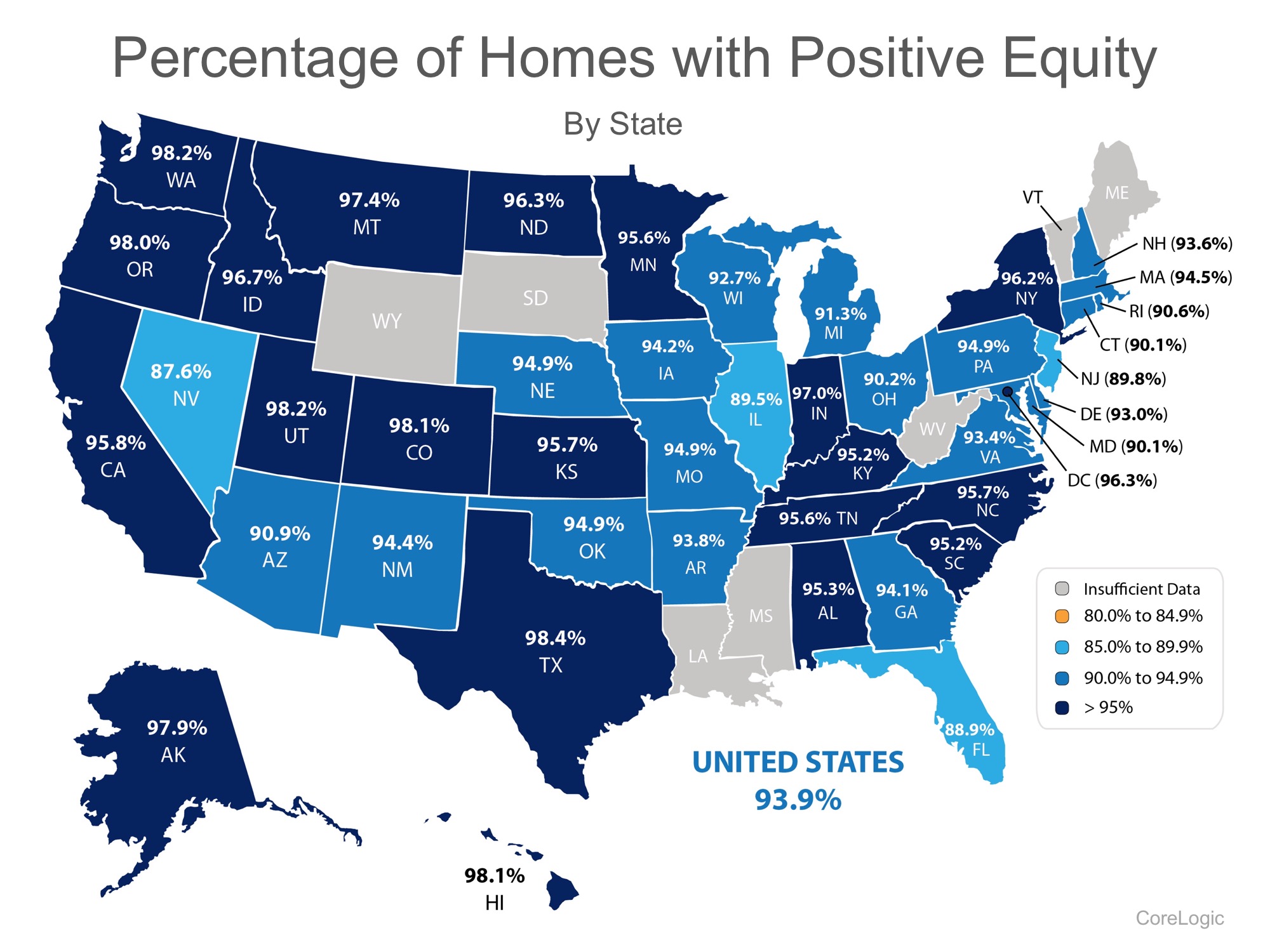
Below is a map showing the percentage of homes with a mortgage, in each state, that have positive equity. (The states in gray have insufficient data to report.)
93.9% Of Homes in The US Have Positive Equity | Simplifying The Market

Significant Equity Is On The Rise

Frank Martell, President & CEO of CoreLogic, believes this is great news for the “long-term health of the U.S. economy.” He went on to say:

“Homeowner equity increased by $766 billion over the last year, the largest increase since Q2 2014. The rising cushion of home equity is one of the main drivers of improved mortgage performance. Since home equity is the largest source of homeowner wealth, the increase in home equity also supports consumer balance sheets, spending and the broader economy.”

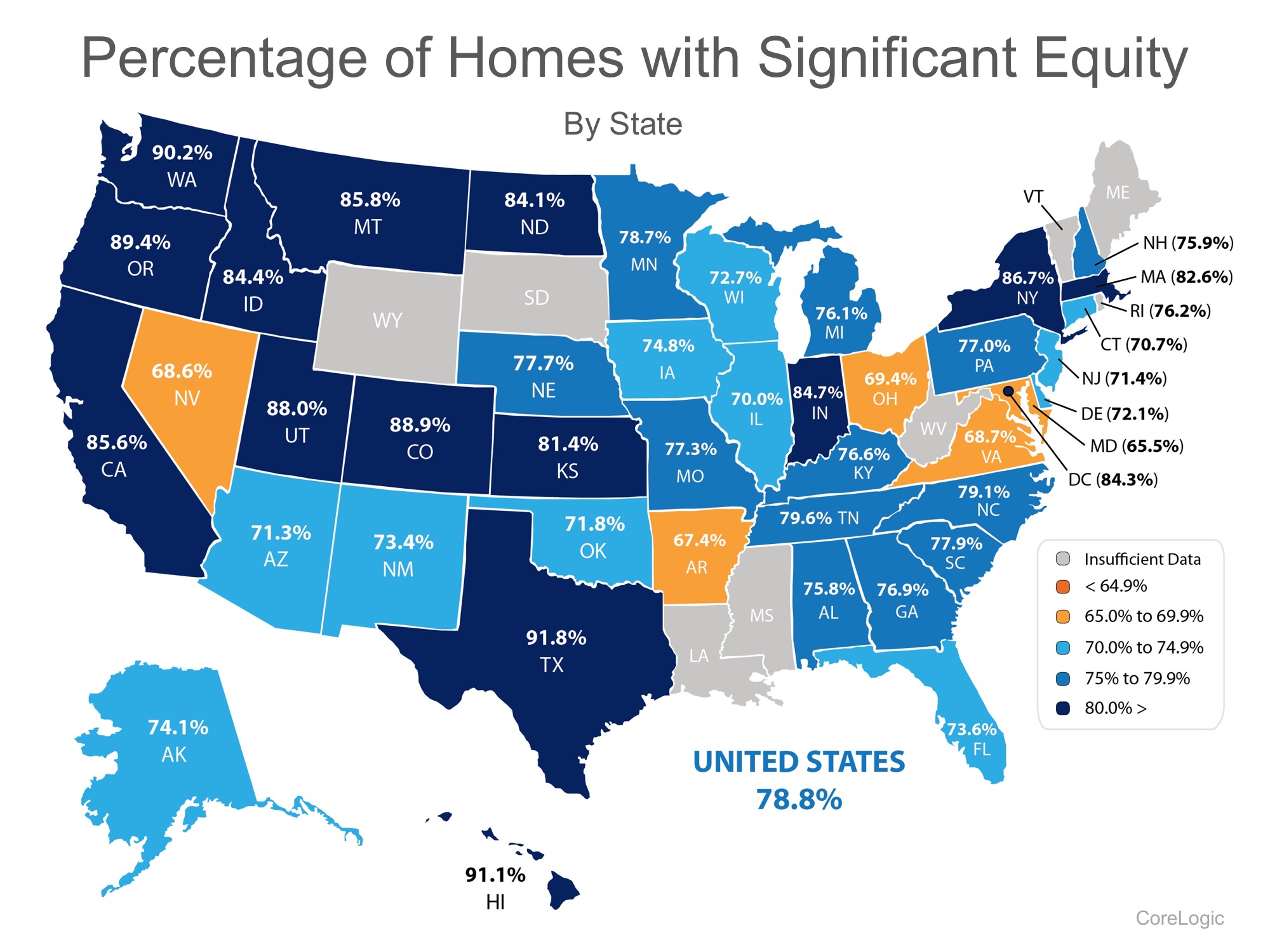
Of the 93.9% of homeowners with positive equity in the US, 78.8% have significant equity (defined as more than 20%). This means that nearly three out of four homeowners with a mortgage could use the equity in their current home to purchase a new home, now.

The map below shows the percentage of homes with a mortgage, in each state, that have significant equity. (The states in gray have insufficient data to report.)
93.9% Of Homes in The US Have Positive Equity | Simplifying The Market

Bottom Line 

If you are one of the many homeowners who are unsure of how much equity they have in their homes and are curious about their ability to move, let’s meet up to evaluate your situation.

93.9% Of Homes in The US Have Positive Equity2017-08-08T10:00:34+00:00

20 Tips for Preparing Your House for Sale [INFOGRAPHIC]

20 Tips for Preparing Your House for Sale [INFOGRAPHIC] | Simplifying The Market

20 Tips for Preparing Your House for Sale [INFOGRAPHIC] | Simplifying The Market

Some Highlights:

  • When listing your house for sale your top goal will be to get the home sold for the best price possible!
  • There are many small projects that you can do to ensure this happens!
  • Your real estate agent will have a list of specific suggestions for getting your house ready for market and is a great resource for finding local contractors who can help!
20 Tips for Preparing Your House for Sale [INFOGRAPHIC]2017-08-04T10:00:02+00:00

Millennial Homeownership Rate Increases

Millennial Homeownership Rate Increases | Simplifying The Market

Recent headlines exclaimed the homeownership rate, as reported by the Census Bureau, rose again in the second quarter of 2017. What didn’t get much attention in the reports is that the homeownership rate for American households under the age of 35 increased a full percentage point from last quarter’s 34.3% to 35.3%. Millennials proved to have the highest increase of any age group.

This came as a surprise to some considering Millennials have come to be known as the “renter” generation. However, a new study by First American, 6 Trends Poised to Reshape Homeownership Demand, revealed reasons why homeownership numbers will continue to increase for Millennials.

Millennials are the most educated generation in the U.S.

Why does that matter? First American explains:

“Our model shows that, all other factors being equal, the likelihood of homeownership increases by 3 percent for those that earn a bachelor’s degree over those with a high school degree. The likelihood of homeownership jumps another 3 percent for those that earn a graduate degree.”

The more educated, the better the likelihood for homeownership. And, as we mentioned: Millennials are the most educated generation in the U.S.

Homes & marriage go together

Marriage is a key determinate in homeownership. According to an analysis by First American, the homeownership rate is 30% higher among married couples compared to non-married households.

Millennials have put off marriage in the pursuit of higher education. As this group ages, more and more will marry and purchase a home.

Parents buy houses

According to the study:

“The homeownership rate is 1.7% higher for households with one or two children compared to households with no children, and it is 5.4 percent higher for households with three or more children.”

The report goes on to say that as Millennials grow older there may be an increase in not just marriage but also in married couples with children. That will probably also create a “corresponding” increase in homeownership demand.

Wages and the economy

The study goes on to explain that recent gains in income growth and a strengthening economy will also help all generations (including Millennials) be more willing and able to purchase a new home.

Bottom Line

We guess the time has come to announce – Here come the Millennials!!

Millennial Homeownership Rate Increases2017-08-03T10:00:21+00:00

Do Your Future Plans Include a Move? What’s Stopping You from Listing Now?

Do Your Future Plans Include a Move? What's Stopping You from Listing Now? | Simplifying The Market

Are you an empty-nester? Do you want to retire where you are, or does a vacation destination sound more your style? Are you close to retirement and not ready to move yet, but living in a home that is too big in size and maintenance needs?

How can you line up your current needs with your goals and dreams for the future? The answer for many might be the equity you have in your house.

According to the latest Equity Report from CoreLogic, the average homeowner in the United States gained $14,000 in equity over the course of the last year. On the West Coast, homeowners gained twice that amount, with homeowners in Washington gaining an average of $38,000!

Do you know how much your home has appreciated over the last year?

Many homeowners would be able to easily sell their current house and use the profits from that sale to purchase a condo nearby in order to continue working while eliminating some of the daily maintenance of owning a house (ex. lawn care, snow removal).

With the additional cash gained from the sale of the home, you could put down a sizeable down payment on a vacation/retirement home in the location that you would like to eventually retire to. While you will not yet be able to live there full-time, you can rent out your property during peak vacation times and pay off your mortgage faster.

Purchasing your retirement home now will allow you to take full advantage of today’s seller’s market, allow you to cash in on the equity you have already built, and take comfort in knowing that a plan is in place for a smooth transition into retirement.

Bottom Line

There are many reasons to relocate in retirement, including a change in climate, proximity to family & grandchildren, and so much more. What are the reasons you want to move? Are the reasons to stay more important? Let’s get together to discuss your current equity situation and the options available for you, today!

Do Your Future Plans Include a Move? What’s Stopping You from Listing Now?2017-08-02T10:00:04+00:00

Be Careful Not to Get Caught in The Rental Trap!

Be Careful Not to Get Caught in The Rental Trap! | Simplifying The Market

There are many benefits to homeownership. One of the top benefits is being able to protect yourself from rising rents by locking in your housing cost for the life of your mortgage.

Don’t Become Trapped 

A recent article by ConsumerAffairs addressed the continuous rise in rents, stating:

“The cost of putting a roof over your head continues to go up. Not only are home prices still rising, but the cost of rent rose 0.5% in June.”

Additionally, in the Joint Center for Housing Studies at Harvard University’s 2017 State of the Nation’s Housing Report, it was revealed that,

“Despite a slight improvement from 2014, fully one-third of US households paid more than 30 percent of their incomes for housing in 2015. Renters continue to be more likely to face cost burdens…the number of cost-burdened renters (21 million) considerably outstrips the number of cost-burdened owners (18 million) even though nearly two-thirds of US households own their homes.”

These households struggle to save for a rainy day and pay other bills, including groceries and healthcare.

It’s Cheaper to Buy Than Rent 

As we have previously mentioned, the results of the latest Rent vs. Buy Report from Trulia shows that homeownership remains cheaper than renting with a traditional 30-year fixed rate mortgage in the 100 largest metro areas in the United States.

The updated numbers show that the range is an average of 3.5% less expensive in San Jose (CA), all the way up to 50.1% less expensive in Baton Rouge (LA), and 33.1% nationwide!

Know Your Options

Perhaps you have already saved enough to buy your first home. A nationwide survey of about 24,000 renters found that 80% of millennial renters plan to eventually buy a house, but 72% cite affordability as their primary obstacle. Aside from affordability, one in three millennial renters have concerns about their credit scores, and another 53% said that a down payment is an obstacle.

Many first-time homebuyers who believe that they need a large down payment may be holding themselves back from their dream homes. As we have reported before, in many areas of the country, a first-time home buyer can save for a 3% down payment in less than two years. You may have already saved enough!

Bottom Line

Don’t get caught in the trap that so many renters are currently in. If you are ready and willing to buy a home, find out if you are able. Let’s get together to determine if you can qualify for a mortgage now!

Be Careful Not to Get Caught in The Rental Trap!2017-08-01T10:00:57+00:00
Go to Top